
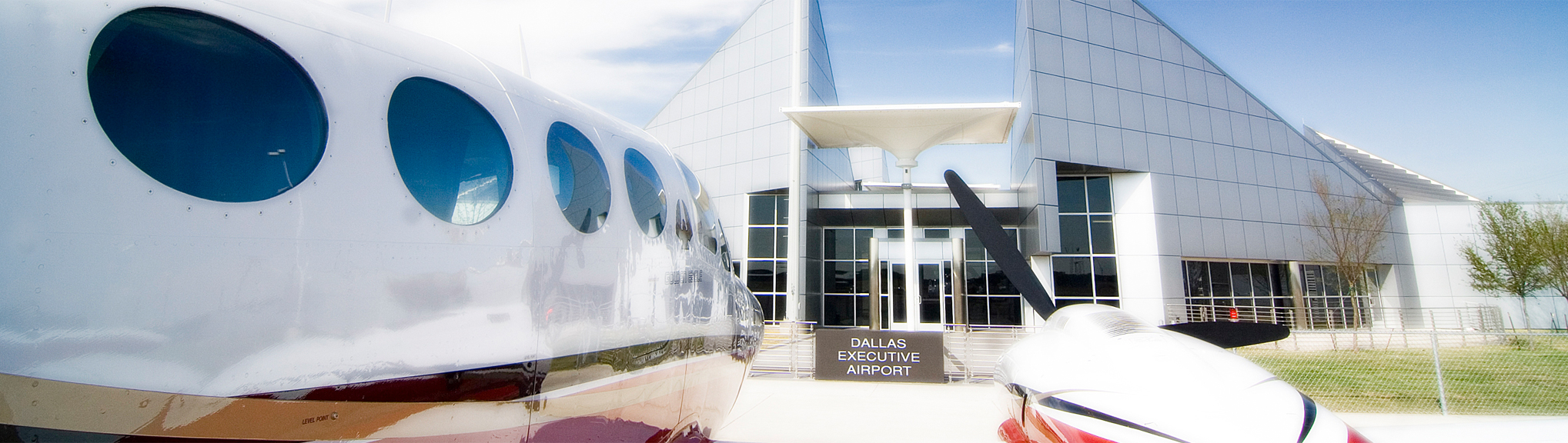
Dallas Executive Airport Guide
Why Dallas Executive Airport?
Feel secure in your travel plans when you choose to fly to Dallas Executive Airport. State-of-the-art amenities and infrastructure provide you with first-class service to corporate and business segments of general aviation. With prime land ready for development, Dallas Executive Airport also provides excellent growth opportunities for both aeronautical and non-aeronautical development. Get ready to take to the skies, stress-free!
Dallas Executive Airport (RBD) is owned by the City of Dallas and operated by the Department of Aviation, which also operates Dallas Love Field and the Dallas Vertiport, combining these three facilities to create the Dallas Airport System. Dallas Executive Airport, a 1,040-acre general aviation facility is fenced, gated, digitally monitored, and located just 10 miles south of downtown Dallas with easy access to major thoroughfares inclusive of I-20, I-30, I-35E, I-45, US-67, and Loop 12.
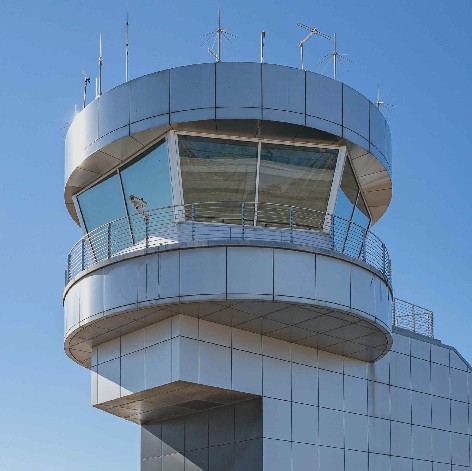
FAA Contracted Air Traffic
Control Tower
Daily Operational Hours
0700L – 2100L
Radio Frequencies
APCH-125.2
ATIS-126.35
Tower
127.25
Ground
119.475
Aviators
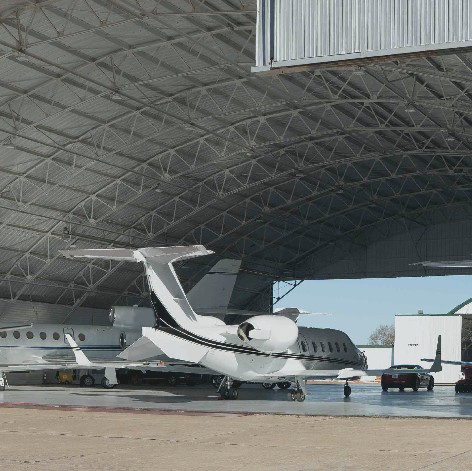
Pilots and passengers alike can take advantage of Dallas Executive Airport’s two fixed-base operators, multiple aircraft maintenance businesses, hangar rentals, flight instruction, restaurant, long and short-term parking, all while paying no landing fees.
Airfield Designed to FAA Group B-II and D-II Standards and Fully Lighted
Our all-weather runways are capable of handling your business aircraft. Take a look at the details below to get an idea of all the necessary specs:
| RWY 13 DECLARED DIST: | RWY 31 DECLARED DIST: |
|---|---|
| TORA 6766FT | TORA 6051FT |
| TODA 7,136FT | TODA 7,136FT |
| ASDA 6,622FT | TORA 7,101FT |
| LDA 5,537FT | TORA 6,6601FT |
13 – PAPI, REIL
31 – Cat I ILS – GS, LOC, MIRL, PAPI, REIL
3,800 feet by 150 feet
17 – PAPI, MIRL, REIL
35 – REIL
24 hours/7 days a week on-site
Dallas Fire Rescue Aircraft Rescue Firefighting and
Emergency Medical Services
Helicopter Operations
Helicopters should cross the airport boundary during approach and departure at 1, 200′ MSL.
Aircraft
It’s our goal to minimize the impact of aircraft operations noise at Dallas Executive Airport on the surrounding neighborhoods without unduly restricting the use of the airport.
If you’re having issues with the volume of sound, click here to submit a noise complaint.* Noise complaints may also be submitted to the Airport Communication Center via email: 214670LOVE@DallasCityHall.com or phone: 214-670-LOVE (5683).
*To help us best serve you, please provide as much detail as possible surrounding your complaint.
Take-off & Departure Procedures
PROFILE
Utilize standard noise abatement procedure and refer to your aircraft manufacturer’s performance manual; if unavailable use the profiles recommended in FAA Advisory Circular 91-53.
TRACK
Maintain Runway Heading to 3,000′ MSL between 10:00 p.m. and 6:00 a.m. consistent with ATC instructions and Class B Airspace requirements.
Rolling take-offs are preferred when air traffic and aircraft performance do not require static take-offs.
Approach & Landing Procedures
PROFILE
Maintain 3,000′ MSL or above as long as possible, consistent with a safe approach landing and Class B Airspace requirements.
Maintain gear up and approach flap setting above 2,500′ MSL.
TRACK
Start landing gear extension and final flap setting desired in order to be in final landing configuration not more than 4.0 miles from runway threshold or less than 1.500′ MSL.
Use minimum reverse thrust consistent with safe operation. Use a straight-in approach when feasible.
Take-off & Departure Procedures
PROFILE
Propeller aircraft should be flown to maintain the manufacturer’s best rate-of-climb airspeed until leaving the airport traffic area.
Avoid low altitude turns. Fly safely and quietly.
When the control tower is closed, departure on Runway 13 is preferred, when wind, weather, and traffic permit.
Approach & Landing Procedures
PROFILE
Plan the approach to be as steep as practicable to minimize the noise impact on residential areas. When feasible, maintain 1,700′ MSL until intercepting the final approach.
TRACK
When the control tower is closed, landing on Runway 13, using right traffic is preferred when wind, weather, and traffic permit.
Real Estate and Development
For real estate and development opportunities, please contact the Department of Aviation Property Management.